
Valve said on November 19 that people can buy the 512 GB Steam Machine directly while inventory lasts. It had fulfilled the current reservations for that version and no longer had a waitlist for it. The 2 TB model is in a different state. Valve says the last purchase invitations for confirmed reservations have been sent, but more people remain on the waitlist than it can currently supply. It is closing that list to new entries. People who already have a place can keep it, with no guarantee they will get a unit. This is a sensible division because there is stock to sell in one configuration and too little reason to invite more people to wait for the other. The storefront now has to express that division clearly. Valve’s November update
The two groups will read the decision differently. A customer who wants the base model can buy one without adding another email to a long exchange. A customer who spent months waiting for 2 TB has an option to get a smaller unit now, but Valve requires them to leave the 2 TB waitlist to switch. Leaving a place that cannot be valued easily is itself a decision. Valve expects to have more information to share in January about additional supply. That is a date to look for an update, without a new delivery date or purchase price attached. A good shop can make progress for the two buyers at once by showing the deal each person actually has.
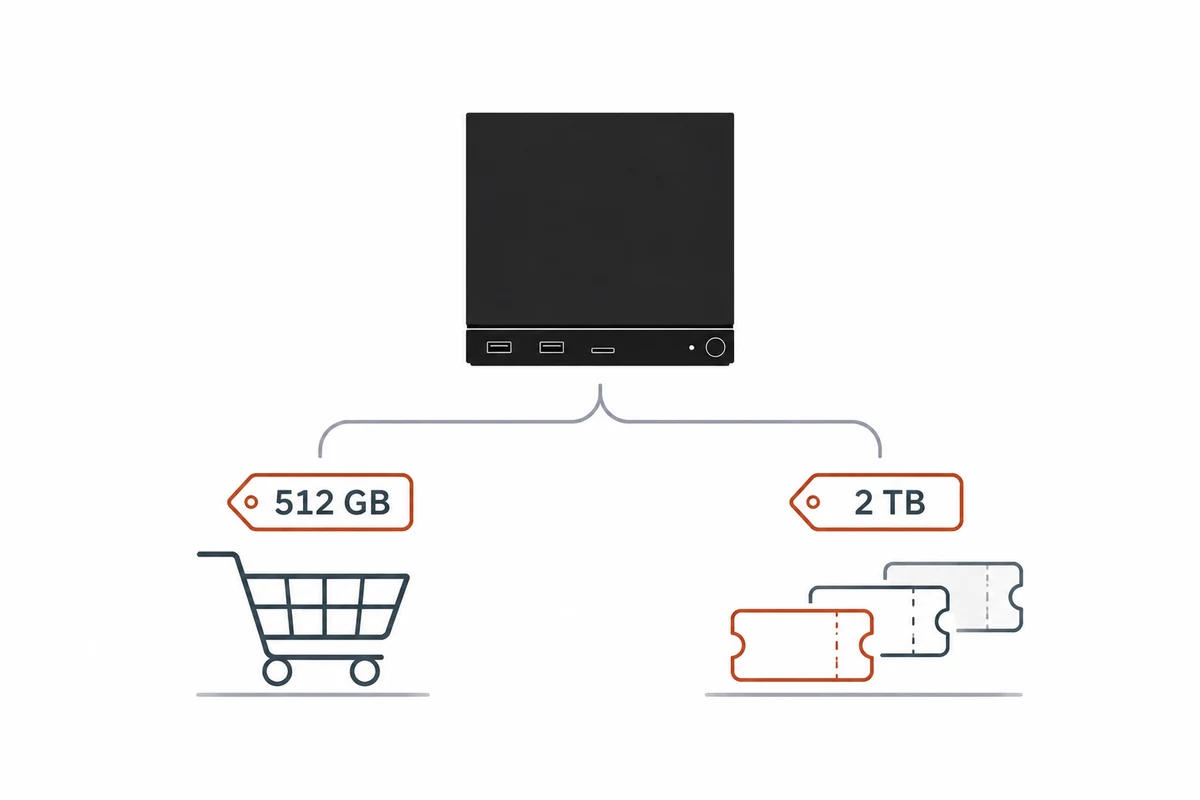
The change separates permission to buy from permission to wait#
The initial Steam Machine process had distinct stages. Valve’s product FAQ describes a randomised signup order for eligible accounts, regional lists and later purchase invitations when reserved units became available. It explained that the system was intended to avoid giving the fastest connection, quickest refresh or most flexible schedule the best chance. The reservation was the position that led to an offer on a unit. The waitlist was a path for someone outside those initial places, with a different level of certainty. In November the distinction can change what a buyer decides. All confirmed 2 TB reservation holders having received an invitation tells a waitlisted person nothing definite about how much stock remains for them. Valve’s original reservation FAQ and product details
The old system did address a real problem. When desirable electronics are sold in limited numbers, putting all the traffic through a few minutes can impose real costs on buyers. People have to reserve time, repeat checks and worry that a slow connection will decide the purchase. A reservation window creates a way to wait away from the store. Customers give up some immediacy and learn to rely on the messages that follow. The company takes on a duty to distinguish a place in line, a right to buy and a paid order. Those words carry practical expectations even if they are defined in a support page. A notification is helpful only if it tells people which step they have reached and what, if anything, they need to do.
Direct sale is the appropriate next step for the version whose queue is clear. The customer does not gain useful information by asking Valve to reserve a box it can already send. An open cart can communicate purchase at the moment of decision, provided that the order really reflects the available inventory for that region and configuration. The same logic does not apply to a queue larger than the boxes the company expects to build. There the ability to enter a name can be easily mistaken for evidence of future movement. Closing new signup is a more accurate description of supply than keeping the page open for people who have no useful estimate.
A store can be honest about inventory without being vague about an order#
Valve says it intends to show the 512 GB unit as out of stock when the available stock runs out, instead of opening a new waitlist. That is a practical change in what the page promises. The new label will describe what a customer can do at that moment. It does not forecast the next delivery. A shop can show the combination of model, storage and controller offer and give the current status for the buyer’s region. That is especially useful when headlines mention the base model and different bundles exist beside it. Someone might see that a particular unit can be added to a cart without being able to buy the configuration they originally considered.
The checkout experience has a point at which its claims become more concrete. An eligible person seeing an active buy button is in a different state from someone who has submitted payment and received an order confirmation. If stock changes between those moments, the shop should say whether the order went through and how to find its status again. For people who have already spent months reading about the queue, a clean distinction between the product page and an order record would reduce unnecessary checking. This is also a service issue. A complete confirmation gives support a purchase to look up, while a plain out-of-stock page answers a different question about inventory.
Direct purchase also rewards attention differently from a reservation window. A user who checks the store while there is inventory can act immediately. Another who hears the news later may find that the status has already changed. That is reasonable when stock is adequate for ordinary visits and more frustrating if a small quantity disappears almost at once. The announcement supplies neither the quantity nor a guarantee that every market will show the same status. It is useful to keep the qualification attached to the story. An active cart is evidence that the platform is selling stock through a simpler route, without showing how long that route will stay open.
The 2 TB trade is a choice about storage, time and the lost position#
Keeping the existing spot in the waitlist is an option for someone who wants the larger model and is comfortable with an uncertain timeline. Choosing the 512 GB device brings a chance to order now only while it is in stock and asks the customer to give up the old place. One of those outcomes has a current price and known nominal capacity. The other keeps open the possibility of an invitation for a different configuration. A customer should not have to infer from a buy button how the two choices interact. Valve’s statement already explains the rule. The last screen before switching is where that explanation would save the most confusion.
The importance of the missing storage depends on which games a person actually keeps installed. Someone who plays two favourites between occasional new purchases can evaluate the smaller version against that list. A household sharing a screen between several players may want several large titles ready at the same time. A person with a limited connection has a different cost when replacing a downloaded game. These experiences are more informative than treating terabytes as an abstract measure of how serious a player is. A buyer needs the size of the installed games and updates they expect to keep, plus room for the system and patches. The device’s advertised storage figure is a useful starting point for making that calculation.
Valve lists expansion by microSD on both models. Extra storage can make a smaller configuration serve more uses, but a buyer still needs to compare the actual hardware, cost and performance of the paths their games require. A card and the internal drive offer different access characteristics. Any plan to replace internal hardware deserves separate checks of compatible parts and instructions. If a player wants a larger built-in drive and would prefer to receive it assembled, that requirement is part of the decision to wait. The newly available unit is appropriate when it meets the need without depending on an uncertain future modification or an assumed savings figure.
Supply warnings belong next to the price with their actual scope#
The Verge describes a US launch price of $1,049 in June for the 512 GB machine without a controller bundle. That is a dated launch price, not a quote from every buyer’s checkout today. Valve says memory and storage costs have continued to rise and that parts supply is constrained, particularly for the 2 TB version. It says it is still building units and has not determined how many it will be able to make or at what price. That is a warning about uncertainty. It is not an announced increase, a confirmed count or an explanation of everything that goes into Valve’s margins. A reader deciding on an order today can compare the displayed price against the model and package they actually receive. The Verge’s report on the change and launch price
The difference between parts and a finished box matters. A missing component can prevent a manufacturer from completing a machine even if many other components are available. A particular storage configuration therefore may have a harder path to sale while the company is still shipping a smaller one. Valve’s comments tell us that its planned quantities are affected. They do not provide a breakdown from which readers can identify the cost of a part or reconstruct a plausible retail price. A buyer can take the availability warning seriously while waiting for an actual offer. Those two positions are consistent. The company can make them easier to hold by providing the next update with model-specific detail.
There is also a strategic motivation to publish what it knows as soon as the conditions change. The company can make a decision to stop enrolling waitlisted buyers before it can announce a price or delivery date. That respects a customer’s time and makes the stock status more credible. It also reduces the risk that a continuing waitlist looks like a demand forecast strong enough to support an arbitrary premium. A future price could be higher or otherwise change. The strongest evidence would be an announced price for a specified device and region, not the frequency of people debating component costs. Until then, the sensible comparisons involve actual offers and needs.
Reading the community requires the same queue distinctions#
The November discussion in the Steam Machine subreddit includes people who say they switched to the 512 GB model and people who are considering leaving their existing spot in place. Some readers wondered whether the end of invitations meant the end of the waitlist. An Engadget account distinguished reservation holders from later signups and described the limits on switching. These are useful observations about which questions the announcement raised. They do not measure how many people changed plans or how much stock exists. The detail that pays off in both discussion and shopping is whether a person has a purchase invitation, a waitlist place, a confirmed order or neither. Engadget’s report · Discussion among Steam Machine buyers
It is natural for people to attach different meanings to the word waiting. Someone who expects a unit when it is ready will view another month differently from someone watching for news about supply. Valve can show that difference at the account level by giving the precise current status in plain language. A mention of January on the same page should say whether it is a next information date or a projected ship date. A customer may keep waiting knowing it is a matter of preference and patience. When the choices are legible, declining the base version can be a considered choice instead of an unspoken wager on what a label might mean.
Managers of other hardware stores can learn from the same tension. A signup list can improve launch fairness when there is a credible expected path to allocation. A list can also grow past the point at which participation informs the customer. Timing and order are separate facts. Stores can publish accurate status and avoid encouraging additional entries when there is no useful supply estimate. Existing positions deserve a durable record so customers can make choices without needing to remember a support article. Moving to direct sale for a healthy stock position is welcome, so long as the people in a different product’s queue can still find what it means.
The purchase still has to fit the room and the games#
The switch to normal checkout does not settle whether Steam Machine suits any particular living room. Valve presents it as a compact PC built around SteamOS with two storage choices and a gaming interface. The strongest case is for someone who wants to play an existing library on a television and has checked that the games and accessories they care about are supported. A person with a different library, a particular multiplayer title or a display setup that needs a certain connection has different questions. A store can make purchase easier and still leave the customer with a legitimate reason to walk away. That is a useful property when a new stock notice makes it tempting to buy by availability alone.
An orderly decision can start with the games the customer wants to open in the first few weeks. Confirm which controller or input methods fit the room and which display cables and settings are needed. Check current compatibility information instead of assuming a familiar PC game must be equally convenient on every operating system. If the planned games require a lot of space, compare installed sizes, available network time and the cost of storage that would work with the preferred configuration. These are observable conditions. They do not require assessing every other small PC on the market. The person who only needs the mid-size library can focus on the direct-sale device instead of treating the larger option as a rank to win.
The same reasoning applies to a reader with a working system who might be attracted mainly by a more compact setup. It helps to estimate how often the old machine keeps them from playing. A computer already preparing games at a desk might serve occasional television play with equipment the owner already has. A second device could make sense when enough people use the screen and the arrangement would remove several recurring steps. The shopping decision should stand on that value even if the cart closes later. Uncertainty about supply can make a deadline feel immediate. It cannot add memory, change compatibility or improve a game the buyer does not want to play.
The option to wait has a different price for different people#
The chance of a future invitation has value only to the person who would prefer to buy the larger configuration under the conditions eventually offered. Suppose two people are in the same list. One owns a working gaming PC and wants a specific replacement with more internal storage. The other needs a compact computer for a particular time and can run their usual games on the base drive. Waiting costs the first person relatively little and the second more. Both can read the same announcement and make an informed choice in different directions. A purchase screen that states what they would give up lets this preference enter the decision at the right time.
There is also a future price and availability question that no buyer can resolve from the announcement. After a long wait it is tempting to give the months already spent the weight of a payment. The relevant questions are how much more waiting the person is willing to accept, whether the storage matters and whether the eventual price is still attractive if an invitation arrives. The months that passed do tell Valve something about the customer’s experience. They cannot predict the next allocation. Giving people a way to remain where they are or to leave with a clear understanding of what is lost is a reasonable response to those unknowns.
The comparison can also include a controller, storage expansion and the cost of preparing the screen the buyer actually uses. Check whether the quoted offer includes the preferred input device or whether that is another order with its own availability. A 512 GB machine plus an expansion solution is a bundle assembled by the buyer, with different timing and support arrangements from a factory configuration. A shopper can write the real costs together before deciding. A price written beside a base model is a starting point, and an open cart is an opportunity to evaluate it, without making the later costs invisible.
A good transition leaves a record the customer can verify#
A person considering a switch should be able to see their existing waitlist status before clicking through to buy. The next screen can note the model being ordered and the loss of the old position. It should also be clear when that change takes effect. If the buyer cancels out of checkout or finds the selected bundle unavailable before placing an order, the shop should be able to describe what happened to the position. The announcement does not describe every interaction in that sequence. These are practical checks for the experience customers will receive. A clear paper trail would make it easier to compare what the shop displayed and what it did.
The account record matters for people who keep waiting too. They should still be able to recognise that the list is closed to others and that their position was retained, without interpreting a general out-of-stock page as an account-level change. A generic product page can describe supply for newcomers while a signed-in status can show information specific to the person who is already waiting. This is a small piece of interface design with a real effect on support costs and time spent checking. When staff can direct people to a consistent state, there is less need to reconstruct a sequence of messages from memory.
What would make the next supply update useful#
January gives Valve an opportunity to show what it now knows. The useful update would say which configurations will be offered, where they can be bought, how existing 2 TB places will be handled and the applicable price. The existing decision deserves support because it lets people order the model Valve can sell and stops signing people up for more uncertain waiting. It would deserve less credit if the marketing and checkout obscured the loss of an existing place or treated an invitation as a finished order. A short statement next to the relevant account state can do more to establish trust than a long description of improvements to the store.
For the moment the strongest case is conditional. Direct sale has real value for the person whose use fits 512 GB and who sees the model in stock. People who want the factory 2 TB configuration have a reason to weigh the existing position they already hold. New buyers should not expect to join that queue while it is closed. Those are different answers to a product announcement, and all can be stated together. Normal retail availability is a welcome stage to reach for a console-shaped PC. The real improvement is knowing which kind of transaction is available before making the decision to start it.